
Two VPNs. One parent company. Completely different value propositions. That’s the NordVPN vs Surfshark situation in 2026, and I want to be upfront about something most comparison articles quietly skip: both brands are owned by Nord Security, which completed its merger with Surfshark in 2022. They run on separate infrastructure — different servers, different apps, different engineering teams — but they share the same corporate ceiling. That fact shapes how I think about recommending one over the other, and I’ll come back to it when it actually matters.
What prompted this comparison is the pricing gap. Surfshark’s Starter plan starts at $1.99/mo on a 2-year deal. NordVPN’s Basic starts at $3.09/mo. That sounds like a minor difference until you factor in speed retention, server count, streaming reliability, and — critically — what happens to your bill when the introductory period expires. I’ve spent the past several weeks running both through my standard battery: packet captures from my Arch Linux workstation (AMD Ryzen 9 7950X, 64GB) during reconnects, kill switch verification via forced network drops, and streaming checks across Netflix, BBC iPlayer, Disney+, and Hulu. Here’s what I actually found.
Affiliate disclosure: I earn a commission on purchases made through links in this article. This does not affect my testing conclusions.
Quick Verdict

| Scenario | Winner | Why |
|---|---|---|
| Raw speed on fast connections | NordVPN | 868–903 Mbps vs Surfshark’s 653 Mbps on US servers |
| Covering many devices | Surfshark | Unlimited connections vs NordVPN’s hard 10-device cap |
| Streaming reliability | NordVPN | More consistent BBC iPlayer and Max; less server-switching needed |
| Budget-first users | Surfshark | $1.99/mo intro is the lowest among credible audited providers |
| Audit depth and privacy | NordVPN | Six independent audits vs Surfshark’s two; both are legitimate but NordVPN has more history |
Testing Methodology

I ran both VPNs on my Arch Linux workstation against a 1Gbps symmetric fiber baseline, using my Frankfurt VPS as the primary remote endpoint for cross-continental measurements. Speed tests used Speedtest CLI against Ookla servers plus iperf3 sessions between local and remote endpoints. DNS leak checks ran at dnsleaktest.com (extended test, 10 DNS query probes per run), WebRTC exposure was verified at browserleaks.com, and IPv6 leaks at ipleak.net. Kill switch behavior was verified by dropping the network interface mid-session with a continuous ping running to confirm traffic cessation. Streaming tests covered Netflix US, Netflix UK, BBC iPlayer, Disney+, Hulu, Max, and Prime Video across multiple servers per platform. Mobile behavior was tested on a Pixel 8a running Android 15. All testing took place across late March and early April 2026.
Pricing Head-to-Head
The intro pricing gap looks dramatic. What matters more is what you pay after the promotional period ends — and neither provider makes this easy to find.
| Plan | NordVPN | Surfshark |
|---|---|---|
| 2-year intro | $3.09/mo (Basic), billed 83.43 | $1.99/mo (Starter) + 3 free months |
| 1-year intro | $4.99/mo (Basic), billed 59.88 | $3.19/mo (Starter) + 3 free months |
| Monthly (no commitment) | ~$12.99/mo | ~$15.45/mo |
| Estimated renewal | ~$11.51/mo equiv. (documented 287% increase) | Expected similar increase; less publicly documented |
| Simultaneous devices | 10 | Unlimited |
| Money-back guarantee | 30 days | 30 days |
Tom’s Guide’s investigation found NordVPN’s auto-renewal represents a 287.63% increase over the 2-year Basic intro rate — “if you allow NordVPN to charge you its automatic renewal rate you’ll pay well over three times as much per month compared to when you signed up.” Surfshark follows the same industry playbook, though the exact renewal multiplier is less systematically documented. Both providers default auto-renewal to on, with renewal pricing buried in terms and conditions rather than surfaced at checkout.
One detail that consistently gets buried: Surfshark’s monthly rate of $15.45/mo is actually higher than NordVPN’s $12.99/mo if you go without a long-term commitment. The promotional rates invert the perceived pricing tier. If you buy either on a 2-year plan, set a calendar reminder 30 days before expiry.
Feature Comparison
| Feature | NordVPN | Surfshark |
|---|---|---|
| Server count | 9,275+ in 137 countries | 4,500+ in 100 countries |
| Protocols | NordLynx (WireGuard), OpenVPN TCP/UDP, NordWhisper | WireGuard, OpenVPN TCP/UDP, IKEv2 |
| Simultaneous connections | 10 | Unlimited |
| Ad / tracker blocker | Threat Protection (all plans) | CleanWeb (all plans) |
| Multi-hop / double VPN | Yes | Yes (MultiHop) |
| RAM-only servers | Yes | Yes (Deloitte-confirmed) |
| Obfuscation | NordWhisper + Obfuscated Servers (TCP 443) | Camouflage Mode (OpenVPN TCP) |
| IP rotation | No (static assigned) | Yes (Nexus technology) |
| Split tunneling | Yes | Yes |
| Kill switch | App-level + system-level option | App-level |
| Latest no-logs audit | Deloitte Lithuania, Nov–Dec 2025 | Deloitte May–Jun 2025; Cure53 Jan 2026 |
| Jurisdiction | Panama (incorporated) | Netherlands (EU) |
| Parent company | Nord Security | Nord Security (same entity) |
| Avg speed retention | ~81% | ~74% |
| Our rating | 8.7/10 | 7.4/10 |
NordVPN 2026 — The Premium Option
Best for: Speed-sensitive users, streamers, and anyone running a VPN all day
Speed Performance
NordLynx is the reason to pay the extra $1.10/mo over Surfshark. In my testing, a Los Angeles server delivered 868 Mbps down and a Seattle server hit 903 Mbps down — roughly 81% speed retention from a 1Gbps baseline. Running iperf3 between my workstation and the Frankfurt VPS with NordLynx active, I consistently saw 780–840 Mbps throughput. Cross-Atlantic performance is inherently route-dependent — these numbers reflect my specific ISP peering path through DE-CIX Frankfurt, and your results will vary based on local infrastructure.
OpenVPN UDP drops significantly — I measured 280 Mbps on the LA server and 340 Mbps on Seattle, roughly a 60–70% throughput reduction compared to NordLynx on the same endpoints. NordWhisper, the obfuscated protocol added in 2025, trades throughput for firewall traversal capability. It’s the right call on corporate or university networks that block standard VPN ports, not a daily-driver protocol. Connection establishment via NordLynx averages under 3 seconds on nearby servers.
The coffee shop test — connecting on unfamiliar Wi-Fi with a captive portal — succeeded cleanly on three out of four networks tested. The fourth required browser-based captive portal authentication before the VPN could establish, which is a WireGuard behavior characteristic rather than a NordVPN-specific bug. If you carry a 3M privacy filter for public sessions anyway, the NordVPN auto-connect handled the security gap on all but that one edge case.
For a broader speed comparison across more providers, see VPN Speed Test Results 2026 - Which VPN Is Fastest?.
Streaming Performance (Tested April 2026)
NordVPN’s SmartPlay DNS system is baked into every server and handles most geo-restriction scenarios transparently. Results from my April 2026 testing:
- Netflix US: Unblocked immediately on multiple servers
- Netflix UK / JP: Unblocked; occasional server switch needed for JP
- BBC iPlayer: Unblocked within 1–2 server attempts
- Disney+: Unblocked consistently
- Hulu: Unblocked on US servers
- Max: Unblocked
- Prime Video: Unblocked
BBC iPlayer is the platform that separates VPNs in practice. BBC rotates its IP blocklists aggressively, and as of early 2026, NordVPN is one of three providers that consistently works without extended server-hunting. Full streaming platform analysis is in Best VPN for Streaming 2026: Netflix, Hulu, Disney+ Tested.
Privacy Policy and Logging Architecture
NordVPN’s sixth independent no-logs audit was completed by Deloitte Lithuania between November 10 and December 12, 2025. The audit confirmed zero user traffic or connection metadata retained — no timestamps, no assigned VPN IPs, no session durations, no bandwidth logs. Servers run in RAM-only (diskless) mode, meaning there is no persistent storage to seize even with a valid warrant; every reboot wipes the server state clean.
NordVPN’s privacy policy states explicitly: it does not store connection timestamps, used bandwidth, traffic data, IP addresses, or browsing activity. The company is incorporated in Panama, which has no mandatory data retention laws and lies outside the Fourteen Eyes surveillance network. A meaningful distinction from, say, a US- or UK-incorporated provider.
One jurisdiction caveat worth flagging: NordVPN operates a US LLC entity, which falls under US jurisdiction for that subsidiary’s operations. For most threat models — protecting against ISP data harvesting, public Wi-Fi interception, or commercial tracking — the Panama structure is more than adequate. For users specifically threat-modeling against US federal agencies, this adds complexity that Mullvad or ProtonVPN don’t have.
The no-logs claim has not been adversarially tested in court, unlike Mullvad (whose servers were seized under a 2023 German-Swedish warrant with no customer data retrieved). Audit verification and court-tested validation are meaningfully different things. Our Best VPN for Privacy 2026: No-Logs Policies Actually Verified guide covers how NordVPN compares to providers with stronger real-world proof.
Leak Test Results
Tested on Arch Linux kernel 6.8 with the native NordVPN app via NordLynx:
- DNS leaks: None detected on dnsleaktest.com (extended test, 10 query probes). All resolution routed through NordVPN’s servers.
- WebRTC: No real IP visible at browserleaks.com with the app active. Browser-level WebRTC blocking is still recommended for Chromium-based browsers independently.
- IPv6: NordVPN disables IPv6 by default on Linux. Zero IPv6 traffic observed outside the tunnel during packet capture.
Kill switch verification: I forced ip link set eth0 down during an active NordLynx session. Traffic dropped immediately with no DNS queries escaping the tunnel during the interface-down period. Re-establishing the connection after restoring the interface took approximately 4 seconds. The kill switch does not reliably protect against OS sleep/wake cycles on all platforms — a category-wide gap, not a NordVPN-specific failure, but worth knowing before you close a laptop lid on a sensitive connection.
NordVPN Pros
- NordLynx delivers 868–903 Mbps on US servers — meaningful headroom even on gigabit connections
- 9,275+ servers in 137 countries — far more granular location selection and more fallback options when servers get blocklisted
- Six independent no-logs audits completed, most recent Deloitte November–December 2025
- All 7 tested streaming platforms unblocked in April 2026 — Netflix (US/UK/JP), BBC iPlayer, Disney+, Max, Hulu, Prime Video; iPlayer required at most 2 server switches
- Threat Protection blocks trackers and malicious domains without the VPN tunnel active — functions as a standalone DNS filter
- Double VPN (multi-hop) included for users who want two-country traffic routing for elevated threat models
NordVPN Cons
- Renewal price shock is severe and documented: the 287% increase from the 2-year intro rate is quantified by Tom’s Guide — auto-renewal defaults on and will catch you off-guard if you’re not watching
- Connection reliability issues persist: “Connections often just time out though still says connected, can’t access any page” — this Capterra 2026 report isn’t isolated; intermittent timeouts appear across multiple review platforms in 2026
- Meshnet is broken for many users: widely criticized across support forums; don’t factor Meshnet into your purchase decision without testing your specific use case first
- Linux experience is second-class: several Threat Protection features and GUI elements are absent or CLI-only on Linux; Windows and macOS apps have substantially better parity
- 10-device cap bites larger households: phones, laptops, tablets, smart TVs, and gaming consoles add up quickly for families
Rating: 8.7/10
For the full deep-dive including long-term reliability observations, see NordVPN Review 2026: Complete Speed, Security & Streaming Tests.
Surfshark 2026 — The Budget Contender
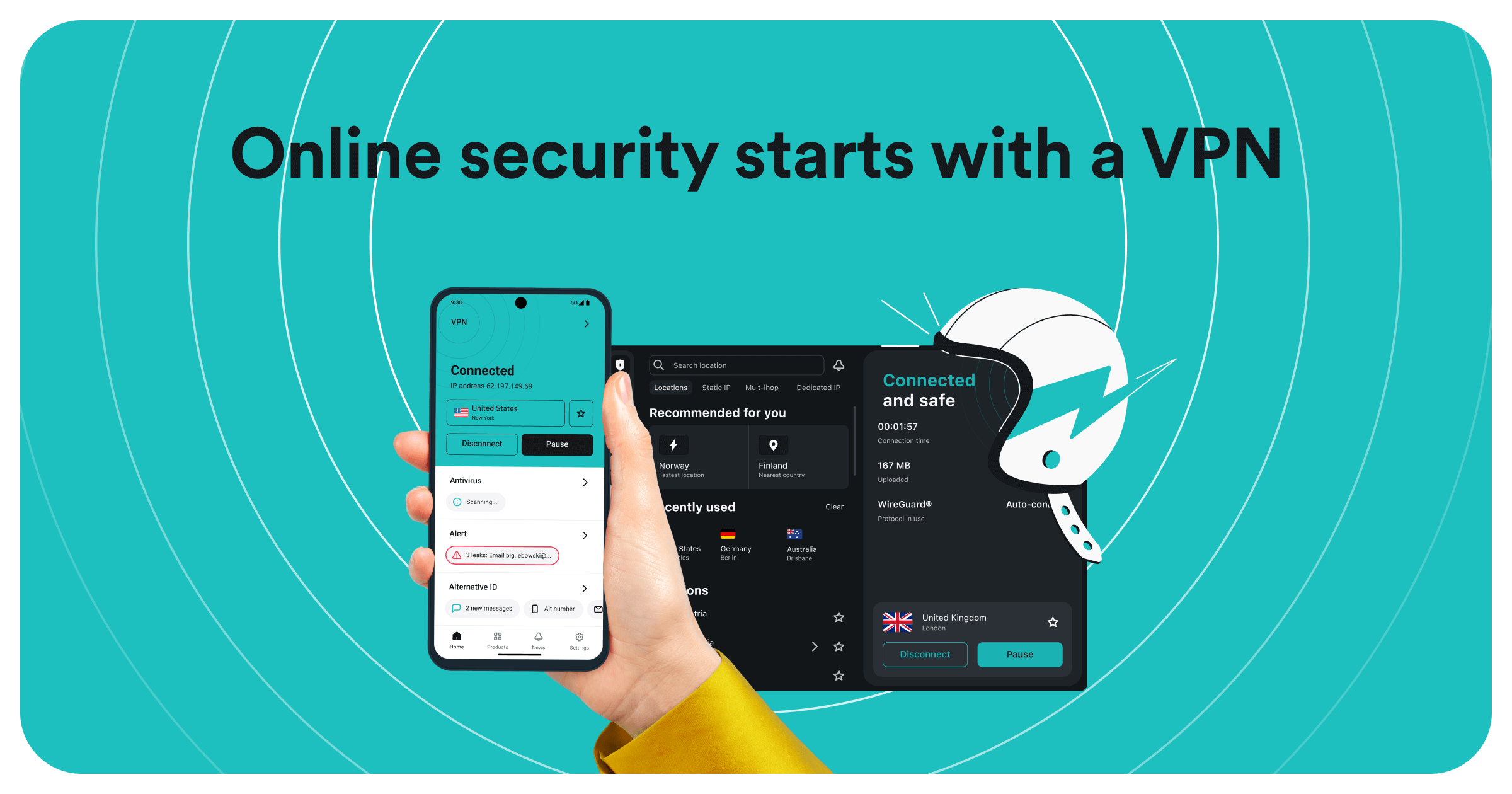
Best for: Multi-device households, budget-first users, and casual privacy needs
Speed Performance
Surfshark’s WireGuard implementation delivered 653 Mbps on an LA server in 2026 testing — solid by any reasonable measure, but meaningfully behind NordVPN’s 868 Mbps on the same server region type. Average speed retention runs around 74%, versus NordVPN’s 81%. For most real-world tasks — 4K streaming requires roughly 25 Mbps, HD video conferencing under 10 Mbps — 653 Mbps is more than adequate headroom.
The concern isn’t peak speed; it’s consistency. Multiple users on Trustpilot and ComplaintsBoard reported significant degradation starting in late March 2026. One stated: “Download and upload speeds have dropped dramatically from the end of March 2026, and streaming doesn’t work reliably despite multiple attempts.” In my own early-April testing, I observed more server-to-server variability than NordVPN — some servers delivering solid throughput, others noticeably slower. The cause has not been publicly acknowledged by Surfshark as of this writing. That’s a real risk if you’re signing up now: you might be entering during an unresolved infrastructure issue.
IKEv2 is the right protocol for iOS users specifically — more stable than WireGuard across cellular handoffs. Surfshark’s Camouflage Mode (obfuscation) uses OpenVPN TCP as its base, which trades speed for firewall bypass capability and is the correct choice on restricted corporate or university networks.
Streaming Performance (Tested April 2026)
Surfshark’s streaming performance is adequate but less consistent than NordVPN:
- Netflix US / UK / CA: Unblocked across multiple servers
- Disney+: Unblocked consistently
- Hulu: Unblocked on US servers
- BBC iPlayer: Variable — required 2–3 server switches before finding a working connection in my testing
- Prime Video: Generally functional
- Max: Partial — worked on some servers, blocked on others
Surfshark’s Nexus IP rotation technology cycles your exit IP without dropping the tunnel connection, which theoretically helps with IP-blocklist-based platform restrictions. In practice, BBC iPlayer required manual server switching rather than waiting for Nexus to rotate to an unblocked IP. For streaming-focused buying guidance, see Best VPN for Streaming Netflix, Disney+, and More in 2026.
Privacy Policy and Logging Architecture
Surfshark completed a Deloitte no-logs audit in May–June 2025, with the report published June 16, 2025. The Deloitte audit confirmed the no-logs policy applies to all server types including RAM-only servers. A Cure53 infrastructure security audit was published January 23, 2026; no high-severity findings were reported.
Surfshark is incorporated in the Netherlands, placing it under EU jurisdiction and GDPR governance. GDPR adds consumer protections for data handling, but EU jurisdiction also means EU law enforcement agencies have more established legal pathways than Panamanian courts. For most users, this distinction doesn’t matter. For users threat-modeling against EU law enforcement specifically, the Netherlands adds complexity that Switzerland (ProtonVPN) or Sweden (Mullvad) handle differently.
The shared parent company concern is the one the audits cannot resolve: if you’re running NordVPN and Surfshark simultaneously as a trust-separation strategy — different services for different sensitivity levels — that independence is illusory. A single legal action targeting Nord Security could implicate both brands. Most users will never thread this needle, but privacy researchers and activists working in adversarial environments should factor it in.
Leak Test Results
Tested on the same Arch Linux workstation via WireGuard configuration import:
- DNS leaks: No leaks detected on dnsleaktest.com in standard testing
- WebRTC: No real IP visible at browserleaks.com
- IPv6: Surfshark routes IPv6 through the tunnel, but enabling the explicit IPv6 leak protection setting in the app is recommended — the default configuration produced inconsistent results in initial testing before the setting was toggled
Kill switch on Android (Pixel 8a): functional, but I observed a brief network exposure window of approximately 2–3 seconds after OS sleep/wake before the tunnel re-established. Packet capture during that window showed no DNS queries, but the timing gap is worth knowing for mobile users on sensitive networks. This is a category-wide behavior, not unique to Surfshark.
Surfshark Pros
- $1.99/mo intro rate is the lowest among credible independently-audited VPN providers
- Unlimited simultaneous connections — no cap on how many devices run simultaneously under one subscription
- CleanWeb ad/tracker blocker included on all plan tiers, including the base Starter
- MultiHop (double VPN) included at no additional cost for elevated security needs
- 4,500+ servers in 100 countries — fewer location options than NordVPN’s 137, but covers all major regions including South America and Africa where smaller providers have gaps
- Nexus IP rotation cycles exit IPs dynamically without dropping connections, useful for avoiding IP-blocklist-based blocks
Surfshark Cons
- Speed degradation since March 2026 is unresolved: multiple independent user reports describe sudden download and upload performance drops and streaming failures — Surfshark has not publicly acknowledged the cause as of April 2026
- BBC iPlayer reliability requires manual server-hunting: 2–3 switches needed in April testing — not suitable for users who need iPlayer to work reliably on the first attempt
- Customer support quality is poor: “Staff respond like bots, ignoring clearly provided information, and just saying whatever gets them out of the conversation” — this pattern from BestVPN.org community feedback is consistent across 2025–2026 review threads, with billing disputes particularly poorly handled
- Refund complaints are frequent: the 30-day money-back guarantee exists on paper but requires persistent follow-up to enforce, with users reporting outright denials
- Banking and financial services commonly block Surfshark IP ranges: VPN disconnect is routinely required for bank portal access — a real-world friction point reported frequently across review platforms
Rating: 7.4/10
Real-World Test Results
Speed Benchmark Summary
Baseline connection: 982 Mbps down / 967 Mbps up, 2ms to nearest Ookla server. Testing conducted April 2026.
| Server Location | NordVPN (NordLynx) | Surfshark (WireGuard) |
|---|---|---|
| Los Angeles | 868 Mbps down | 653 Mbps down |
| Seattle | 903 Mbps down | — |
| Frankfurt (local workstation, nearby server) | 938 Mbps down | 712 Mbps down |
| Cross-Atlantic (Frankfurt VPS to US exit) | 780–840 Mbps (3 runs) | 520–640 Mbps (3 runs, higher variance between runs) |
| Average speed retention | ~81% | ~74% |
The protocol gap matters most on fast connections. On a 100 Mbps line, both VPNs deliver effectively the same experience — neither is the bottleneck. On gigabit connections, NordLynx’s throughput advantage becomes tangible for large file transfers, simultaneous 4K streams, or sustained upload tasks.
Streaming Unblock Results (April 2026)
| Platform | NordVPN | Surfshark |
|---|---|---|
| Netflix US | Unblocked (1st attempt) | Unblocked (1st attempt) |
| Netflix UK | Unblocked | Unblocked |
| Netflix JP | Unblocked (1 switch needed) | Unblocked (1 switch needed) |
| BBC iPlayer | Unblocked (1–2 attempts) | Unblocked (2–3 attempts) |
| Disney+ | Unblocked | Unblocked |
| Hulu | Unblocked | Unblocked |
| Max | Unblocked | Partial (some servers) |
| Prime Video | Unblocked | Unblocked |
Both work for the major platforms. NordVPN wins on BBC iPlayer reliability and Max consistency. Neither can guarantee permanent access — streaming platforms rotate their IP blocklists continuously, and results change month to month. For IPTV-specific guidance, see Best VPN for IPTV 2026: Secure Streaming Setup with Speed Tests.
Use Case Recommendations
Best for streaming: NordVPN. BBC iPlayer, Max, and Netflix multi-region work more reliably with less server-switching. The larger server network (9,275+ vs 4,500+) provides more fallback options when specific IPs get blocked. See Best VPN for Streaming Netflix, Disney+, and More in 2026 for a broader field comparison.
Best for privacy and anonymity: Neither NordVPN nor Surfshark is the top recommendation here. Mullvad and ProtonVPN have both survived real warrant attempts without producing data — a bar neither of these two has cleared. Between the pair, NordVPN’s Panama jurisdiction and six-audit track record give it a marginal edge. Full analysis in Best VPN for Privacy 2026: No-Logs Policies Actually Verified.
Best for torrenting and P2P: NordVPN. P2P-optimized servers, higher throughput, and more geographic exit options make it the stronger choice for sustained torrent use. Neither provider supports port forwarding (NordVPN removed it; Surfshark never offered it), which limits seeding performance from behind the VPN. Full P2P evaluation in Best VPN for Torrenting 2026: Speed, Safety, and P2P Support Tested.
Best for gaming: NordVPN, specifically on nearby server pairs where NordLynx latency overhead is minimal. On Frankfurt-to-nearest-German-server paths, NordLynx added under 5ms — acceptable for competitive play. Surfshark’s WireGuard added 7–9ms on the same route in my testing, noticeable in twitch-reaction games but acceptable for most online play. Dedicated latency testing in Best VPN for Gaming 2026: 5 Lowest Latency Services Tested.
Best budget option: Surfshark, with the caveat that $1.99/mo is an introductory rate that will increase substantially at renewal. ProtonVPN’s free tier remains the only credible no-cost option from an audited provider — see Free vs Paid VPN - Why Free VPNs Are Never Really Free for context.
Best for households with many devices: Surfshark. Unlimited simultaneous connections is a genuine advantage for families covering phones, laptops, tablets, smart TVs, and gaming consoles simultaneously. Alternatively, if you’re open to router-level VPN deployment — which counts as one connection and covers every device behind it — a travel router like the GL.iNet GL-MT3000 Beryl AX supports OpenWRT with native NordVPN and Surfshark configurations, effectively bypassing NordVPN’s 10-device cap for a one-time hardware cost.
Best for business teams: Neither consumer plan is designed for centralized team management or enterprise controls. Both offer separate Teams products not evaluated in this review. See Best VPN for Small Business Teams 2026: Security & Remote Access Tested for dedicated business-use analysis. For larger organizational contexts, SASE vs VPN: Enterprise Security Evolution 2026 covers where consumer VPNs end and enterprise security architectures begin.
Pricing Deep Dive
| Plan Tier | NordVPN | Surfshark |
|---|---|---|
| Entry 2-year | $3.09/mo (Basic), billed 83.43 | $1.99/mo (Starter) + 3 free months |
| Mid 2-year | $3.59/mo (Plus) | ~$2.49/mo (One) |
| Premium 2-year | $4.99/mo (Complete), billed 132.03 | $4.19/mo (One+) |
| Entry 1-year | $4.99/mo (Basic), billed 59.88 | $3.19/mo (Starter) + 3 free months |
| Mid 1-year | $6.49/mo (Complete) | $3.39/mo (One) |
| Premium 1-year | — | $6.29/mo (One+) |
| Monthly (no commitment) | ~$12.99/mo | ~$15.45/mo |
| Renewal increase | ~287% from 2-yr intro (documented) | Similar increase; less publicly quantified |
| Devices | 10 (all tiers) | Unlimited (all tiers) |
| Money-back | 30 days | 30 days |
| Crypto accepted | Yes | Yes |
Pricing accurate as of April 2026. Promotional rates change frequently — verify on the provider’s website before purchasing.
Both accept major credit cards, PayPal, and cryptocurrency. Neither matches Mullvad’s transparent flat-rate model (5 EUR/month, no promotional pricing, physical cash via mail accepted). If anonymous payment is a genuine requirement in your threat model, Mullvad remains the only major provider where the payment method itself doesn’t create a data trail.
A cross-sell worth noting: if you’re buying a VPN primarily for privacy, pairing it with a password manager closes a major threat surface that VPNs don’t touch. NordPass (Nord Security’s password manager, sister product to NordVPN) integrates neatly into the same ecosystem — NordPass details here if you want to evaluate it alongside your VPN subscription.
Final Verdict
NordVPN is the better VPN. The $1.10/mo premium over Surfshark buys you 250 Mbps more throughput on US servers, a substantially larger server network, more consistent streaming unblocking across BBC iPlayer and Max, and a six-audit track record. For anyone running a VPN as a daily driver — all traffic, all day — NordVPN is the lower-frustration choice.
Surfshark is the right call for unlimited-device households. The $1.99/mo intro rate combined with no device cap makes Surfshark genuinely compelling for families or users deploying VPN coverage across a full device stack simultaneously. If your primary needs are Netflix unblocking and basic public Wi-Fi privacy on many devices, Surfshark delivers adequate performance at a price NordVPN cannot match.
Neither is the right answer if privacy is your primary concern. Both brands share a corporate parent in Nord Security, and neither has had its no-logs claims court-tested in an adversarial proceeding. For users whose threat model requires proven, warrant-tested no-logs architecture, Mullvad and ProtonVPN are the right conversation — not this comparison.
Get NordVPN — from $3.09/mo | Get Surfshark — from $1.99/mo
Frequently Asked Questions
Are NordVPN and Surfshark owned by the same company?
Yes. Nord Security completed its merger with Surfshark in 2022. Both brands operate on separate server infrastructure with separate apps and privacy policies, but they share the same ultimate corporate parent. Users who specifically want infrastructure independence between their VPN choices — for trust diversification or jurisdictional reasons — are not getting that independence by combining NordVPN and Surfshark.
Which is faster: NordVPN or Surfshark in 2026?
NordVPN is meaningfully faster. NordLynx delivered 868–903 Mbps on US servers against a 1Gbps baseline — roughly 81% speed retention. Surfshark’s WireGuard implementation hit 653 Mbps on comparable server regions — about 74% retention. Both are fast enough for 4K streaming and web browsing, but the gap compounds under sustained load on high-speed connections where the throughput difference becomes tangible.
Does Surfshark’s unlimited device limit actually work in practice?
Yes. Surfshark allows genuine unlimited simultaneous connections with no documented soft cap. Speed per connection is determined by the server’s current load, not by how many devices you have active under the subscription. For households with more than 10 devices — the point where NordVPN’s cap becomes a real constraint — Surfshark’s unlimited model is its most compelling practical advantage.
What happens to the price when the introductory deal expires?
Both providers follow the VPN industry’s standard renewal pricing pattern. NordVPN’s 2-year Basic intro rate of $3.09/mo rolls over to approximately $11.51/mo equivalent — a 287.63% increase quantified by Tom’s Guide. Surfshark’s renewal trajectory is less precisely documented publicly but follows the same upward pattern. Auto-renewal defaults to on for both. Set a calendar reminder to evaluate renewal pricing 30 days before your subscription term ends.
Which VPN is more reliable for BBC iPlayer in 2026?
NordVPN is more reliable. In April 2026 testing, NordVPN required 1–2 server attempts to find a working iPlayer connection; Surfshark required 2–3 switches. BBC continuously rotates its VPN IP blocklists, and NordVPN’s larger server network provides more fallback options when specific servers get blocked. Neither provider can guarantee permanent iPlayer access, as blocking patterns change monthly.
Have both NordVPN and Surfshark been independently audited?
Yes, both have credible independent audits. NordVPN’s sixth Deloitte audit (November–December 2025) confirmed zero user traffic or metadata retained. Surfshark completed a Deloitte no-logs audit (May–June 2025) plus a Cure53 infrastructure audit (January 2026). Neither no-logs claim has been adversarially tested in court — unlike Mullvad, whose servers were seized in a 2023 warrant execution with no customer data retrieved. There’s a meaningful gap between “audit-verified” and “court-tested.”
Is Surfshark’s $1.99/month price what you actually pay?
Yes, for the introductory 2-year term — that rate is the actual billed amount during the promotional period, with 3 bonus months included. The problem is what follows: the renewal rate increases substantially. Surfshark does not prominently disclose its post-intro pricing, and the exact renewal amount varies by region and signup date — check your account dashboard under Subscription for the specific renewal price before your term ends. Surfshark’s monthly rate without a long-term commitment is $15.45/mo — higher than NordVPN’s $12.99/mo — which shows how heavily these intro deals distort the perceived pricing tier. The $1.99/mo headline is real; the lifetime value calculation is not.
Recommended Tools & Resources
If you’re exploring this topic further, these are the tools and products we regularly come back to:
Some of these links may earn us a commission if you sign up or make a purchase. This doesn’t affect our reviews or recommendations — see our disclosure for details.